What Is a Trajectory? What Happens After You Sell Data to AI Companies
A roof, row by row
A roof, row by row
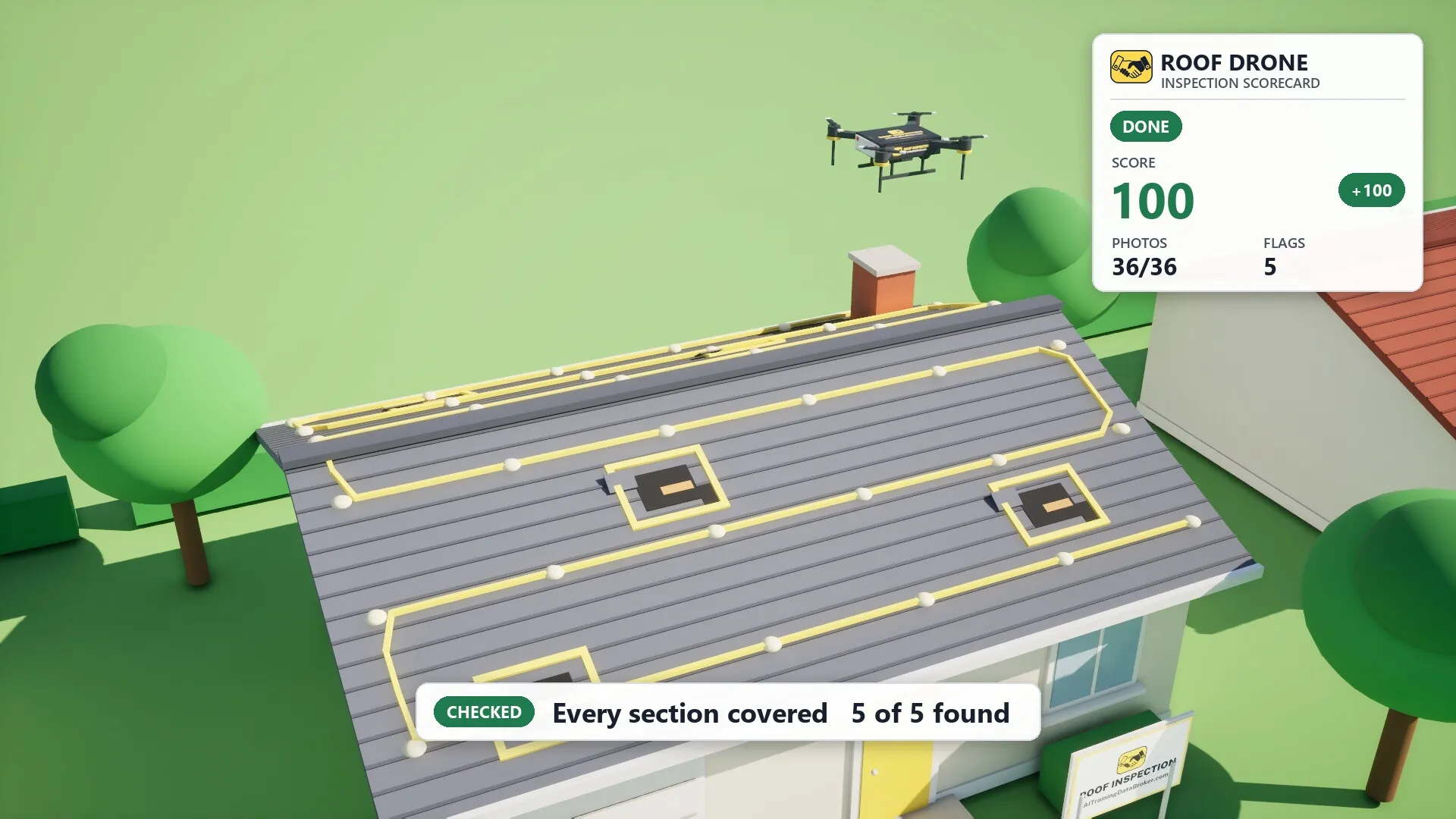
A drone flies over a roof one row at a time, and it stops for a photo at each of 36 dots.
Every stop, every turn and every flagged shingle is saved.
That saved path is the kind of data AI companies pay for.
The video
What Is a Trajectory? What Happens After You Sell Data to AI Companies
Full script
A drone flies over a roof one row at a time, and it stops for a photo at each of 36 dots.
Every stop, every turn and every flagged shingle is saved.
That saved path is the kind of data AI companies pay for.
You sell your data to an AI company, and the money comes in.
Then what happens to your data?
I will follow it after the sale, one step at a time, so you know what you are really selling.
Quick note: the drone world you just saw is a demo, built for this video.
A real one takes more training and a company's own data.
Why does an AI company pay for your data in the first place?
Because it is building AI agents, which is software that does a whole job, many steps in a row.
Think of an agent that plans a roof inspection, flies it, finds the damage and writes the report.
To learn a job like that, an agent needs real jobs, recorded step by step, from start to finish.
After the sale, the AI company turns your data into exactly that.
The name for it is a trajectory.
A working agent saves a business time and money, and that is why your data is worth paying for.
In plain words, a trajectory is the record of one job, from the first step to the last.
Look at the drone's trail, where every dot is one step.
Each step holds 3 things: what the drone saw, what it did, and what happened next.
At this dot, it saw a photo of row 2, it flagged a shingle, and the damage was real.
Put all the dots in order, and you have the whole job, not just the answer at the end.
Now watch 2 runs over the same roof.
Both were scripted for this video, to show the difference.
The first one zig-zags across the roof, misses spots and has to double back.
The second one flies row by row, and every section of the roof gets its photo.
Both trails are worth something to an AI lab, and that includes the failed try.
A run that went wrong shows the AI what not to do, and where it went wrong.
So the jobs that went badly are part of the data, not something to clean out.
Still, a trail will not teach an AI much unless it can tell a good run from a bad one.
So how does it know?
That is the job of a verifier, which is a check against what really happened.
Here, each flagged spot is checked against the real damage map, so hits turn green, and misses turn red.
A viewer asked in the comments how anyone can check work when the right answer depends on the person.
That is the hard part, and it is why the recorded result in your data matters so much.
The claim was paid, the invoice was settled, the part passed inspection: that result is the answer key.
Take a roofing company's job file, start to finish.
The inspector takes photos, writes notes, marks the damage and sends a repair quote.
Weeks later, the insurance claim is paid, or it is turned down.
Put in order, that file is a trajectory, and the claim result is its verifier.
A construction company has the same thing in a change order, from the request to the approved price.
And an accounting firm has one in every month-end close, from the first entry to the signed report.
That brings us to what most companies keep.
Many owners think the final report is the valuable part, but it is often the other way around.
A job file starts as dozens of emails, photos, calls and changes.
Most companies keep only the final report, and the steps that led to it are gone.
That report shows the answer, but not how anyone got there.
So the AI loses the second look, the pushback and the mistake that was fixed.
That is the part it most needs.
This will not fit every company, because if your files hold only final reports, there is much less to license.
And research points the same way.
In May 2024, at ICLR, a large AI research conference, Hunter Lightman and colleagues presented a paper.
They compared 2 ways to check an AI's work.
One way checked only the final answer, and the other checked each step on the way there.
Checking each step worked clearly better, and their best model solved 78% of a test set of hard math problems.
To make that possible, people wrote 800,000 labels, one step at a time.
These were math problems, not company jobs, but it shows why AI labs want the steps, not only the result.
So, back to the drone and its trail of dots.
After the sale, an AI company turns your data into trajectories, the steps of real jobs, to train agents that do the work.
The result you recorded is what lets it check the work, so keep the result with the job.
And keep the whole history, the failed tries included, because the steps are what an AI learns from.
You may be wondering what counts as a trajectory in your own company.
Support tickets, job files, email threads and approvals all count, as long as they run from the first step to the last.
3 things make them worth more: the job is complete, the outcome is recorded, and you have many years of them.
Before anything is licensed, we de-identify your data, which means we strip out the names, addresses and policy numbers.
It stays within the privacy rules that apply to it.
Most deals are licenses, so you keep your data and the rights.
On your side, the main job is exporting the files, and we guide your team through it.
So the next question is a fair one: who can take these files to an AI company for me?
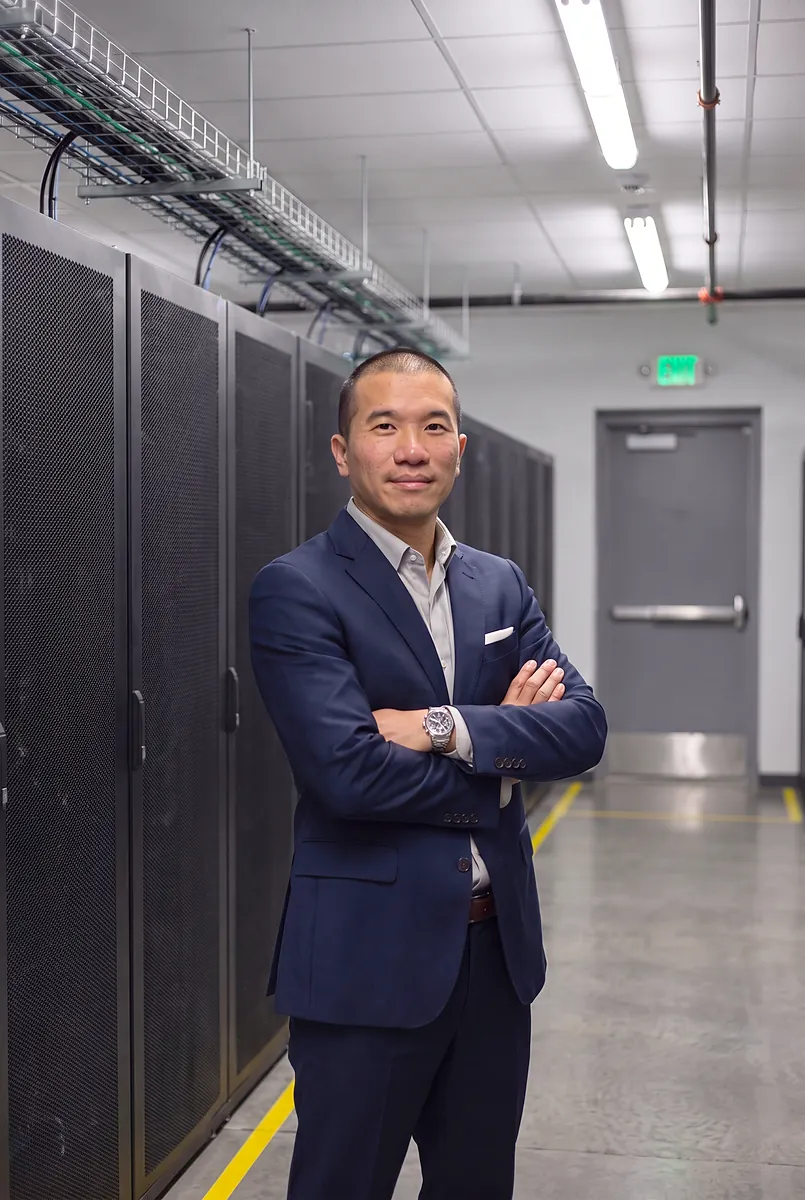
I'm Jimmy. I have worked in data at Fortune 500 companies, as a data analyst, a data engineer and a software engineer, and I am trained in data science. I am also a Canadian military veteran, specialized in data analysis and reporting.
In a data deal, I come in as your broker and technical advisor.
As your broker, I take one de-identified sample of your data to several AI labs and bring back their offers, so you can compare price and terms.
I work through the terms with you, and you make the final call.
As your technical advisor, I guide your team through what to export, the format, the de-identification and compliance.
We move forward only after your team signs off.
AI companies pay my fee.
Already shopping your data around? Contact us anyway. We can still work through the terms with you and help you negotiate a better price.
If you are buying data for an AI lab, I find the right data and see it through to delivery.
After the sale, your data becomes the steps an AI learns a job from.
Tonight, pick one finished job and check that its file shows every step and how it ended.
More on what AI companies do with your data at AITrainingDataBroker.com.
Thank you for watching.
I will see you next time.
More slides
AITrainingDataBroker.com
Buy/Sell/License
AI Data Market
Update, Nov 12
Healthcare, finance, professional firms, code and trade video, and the terms to check
Jimmy Lin
AITrainingDataBroker.com
What are
RL environments?
Explained for owners
RL = reinforcement learning: how AI learns to do real work, and why it needs records from companies like yours.
Jimmy Lin
AITrainingDataBroker.com
Can an accounting or CPA firm
sell or license its data
to AI companies?
For accounting, CPA and bookkeeping firms: what you can license, and the one thing you never sell.
Jimmy Lin