Escrow or Upfront? How You Get Paid When You Sell Data
AITrainingDataBroker.com
Escrow or Upfront?
How You Get Paid
When You Sell Data
You
AI lab
3 parts: 4 ways to be paid, the risks, the red flags
Jimmy Lin
Escrow or Upfront? How You Get Paid When You Sell Data
There are 40,000 files packed and ready to send to an AI lab, and not one dollar has arrived yet.
The contract says the money comes after delivery and a review, and only for the files the AI lab accepts.
The deal is made up, but that payment line comes from real data deals.
So is there a safer way to get paid?
The video
The video for these slides is on its way. It will play here as soon as it is on our channel.
Subscribe on YouTubeFull script
There are 40,000 files packed and ready to send to an AI lab, and not one dollar has arrived yet.
The contract says the money comes after delivery and a review, and only for the files the AI lab accepts.
The deal is made up, but that payment line comes from real data deals.
So is there a safer way to get paid?
In a $400,000 deal, the money can move in 4 common ways, and each one leaves a different amount at risk.
Most owners think the price decides whether a deal is good.
It is actually the timing of the money that decides who carries the risk.
Whoever pays or delivers first is trusting the other side to finish the deal.
So start with the way many sellers are paid today.
So the first way pays nothing up front: you deliver every file, and the AI lab reviews them before it pays.
In one license, that review took about 30 business days.
The price per file is the total fee divided by the agreed file count, so $400,000 for 40,000 files is $10 a file.
Duplicates across formats, corrupt files and missing files are taken out, so the final payment can come in lower.
My video on why you get less money than your contract says shows how that count works.
A second way puts part of the money up front, at signing, before you deliver anything.
In one recent deal, the AI lab offered about 25% up front, and the sellers asked for 70%.
Where it lands is a negotiation, and about half up front is a good result.
Many sellers get nothing until the full review is done, so money at signing also shows the AI lab is serious.
The rest of the payment still waits for the review.
Splitting the deal into stages is the third way.
The AI lab pays a quarter, you deliver a quarter of the data, and the AI lab checks that batch before the next payment.
Then you repeat it until all 4 batches are done.
Once a batch is accepted and paid, there is no refund on it, so each stage is closed for good.
At any moment, the most either side has at stake is about one batch.
And the fourth way is escrow.
Cornell Law School's legal dictionary, last reviewed in November 2025, says escrow means the money is placed with a neutral third party, the escrow agent.
The agent releases it only when the instructions both sides agreed on are met.
In a data deal, the AI lab puts the full amount with a bank or escrow agent.
The money is then released as each delivery is accepted.
One AI lab proposed holding the money in escrow until its review was done, so always ask what releases it.
So who does each way protect?
Paid after review protects only the AI lab, because it pays for nothing it has not checked.
Money up front protects you in part, if the AI lab walks away after delivery.
Stages limit the risk for both sides to one batch at a time.
Escrow proves the AI lab has the money, and it stops you from being stuck with an unpaid delivery.
Now take the same made-up $400,000 deal at the moment your data has left the building.
Paid after review, the whole $400,000 is still with the AI lab.
With half up front, $200,000 is still waiting.
In stages, you are paid for each batch before you send it, so the gap is never more than one batch, $100,000.
With escrow, the full amount is already set aside, so you know the money exists.
This will not fit every deal, because a small deal may not be worth the cost of an escrow agent.
There is one more risk, and it comes after you are paid.
Some licenses let the AI lab ask for a refund if a hidden problem turns up after acceptance, called a latent defect.
Section 2-608 of the Uniform Commercial Code is a US rule for selling goods.
It lets the side that bought them take back an acceptance within a reasonable time.
Data is not goods, and a reasonable time is vague, so ask for a set number of days in your contract.
A refund clause will not protect you unless it has an end date.
A vague definition of acceptable data does the same damage, because almost any file can be rejected.
If you hear any of these, stop and ask why.
One is a request to deliver everything now and talk about payment after the review.
Another is a refund clause with no time limit, or a contract that never says what acceptable data is.
Then there is a push to sign in 2 days, which is a pressure tactic that leaves no time to read the contract.
The FTC's advice on avoiding scams, from July 2023, says honest businesses will give you time to make a decision.
Before you sign, have a lawyer read the payment and refund clauses with you.
You may be wondering which of these ways would fit your own data.
Stages work best when your data splits cleanly, for example by year, by project or by folder.
Escrow makes more sense when the deal is large, or when you and the AI lab are new to each other.
And the cleaner your files are before delivery, the less any review can take back.
So how would your data split into batches, and what would an AI lab offer for it?
That is where I come in.
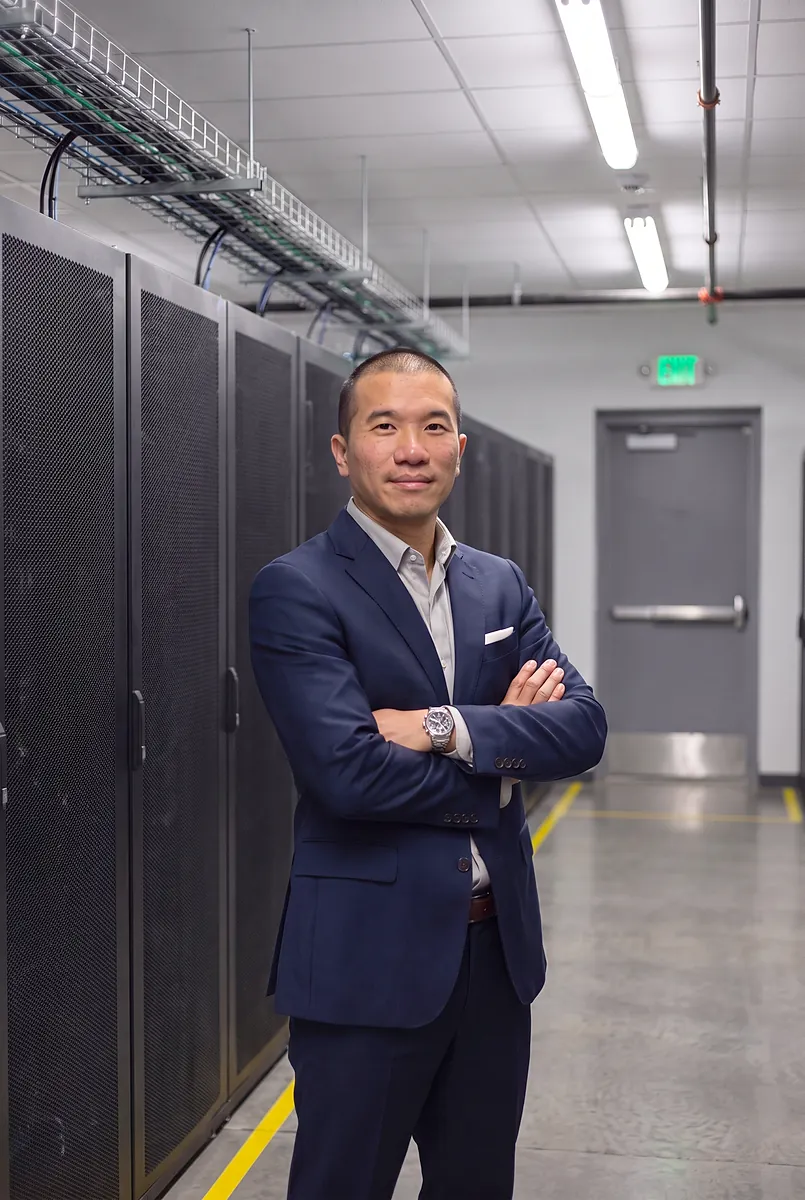
I'm Jimmy. I have worked in data at Fortune 500 companies, as a data analyst, a data engineer and a software engineer, and I am trained in data science. I am also a Canadian military veteran, specialized in data analysis and reporting.
As your broker, I help you create relationships with AI labs and bring back their offers, so you can compare the price and the terms before you decide.
As your technical advisor, I guide your team through what to export, the format, the de-identification and compliance.
I work on commission only, paid by the AI lab.
If you are buying data for an AI lab, I find the right data and see it through to delivery, so you can focus on AI research.
How you get paid decides who carries the risk, so agree on when the money moves before the first file leaves.
More on payment terms in a data deal at AITrainingDataBroker.com.
Thank you for watching.
I will see you next time.
More slides
AITrainingDataBroker.com
What Does
“Indemnify” Mean
When You Sell Data?
Furniture brand
AI lab
Design studio
3 parts: the promise · the cap · the rule
Jimmy Lin
The first back-in
The first pick