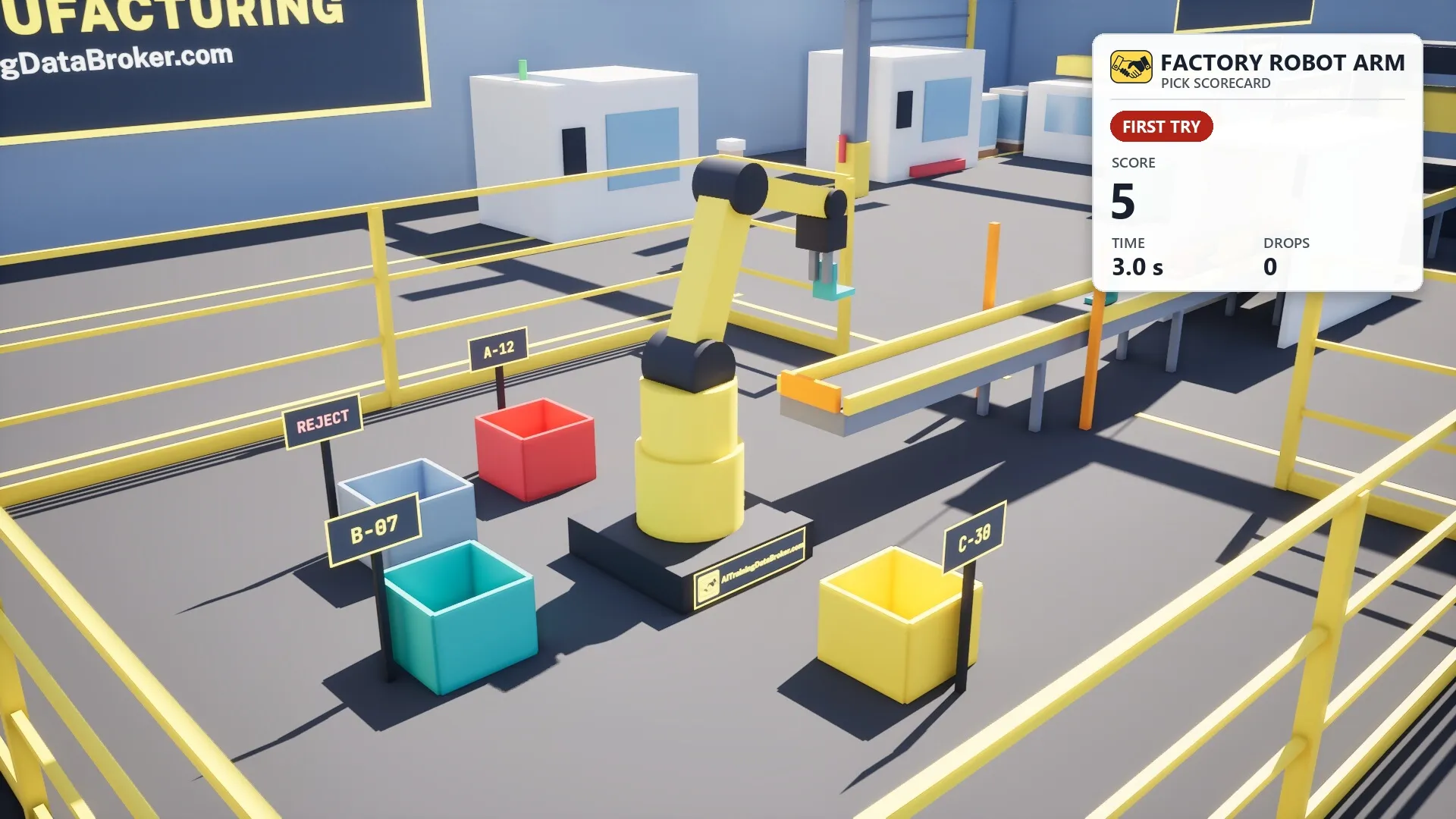
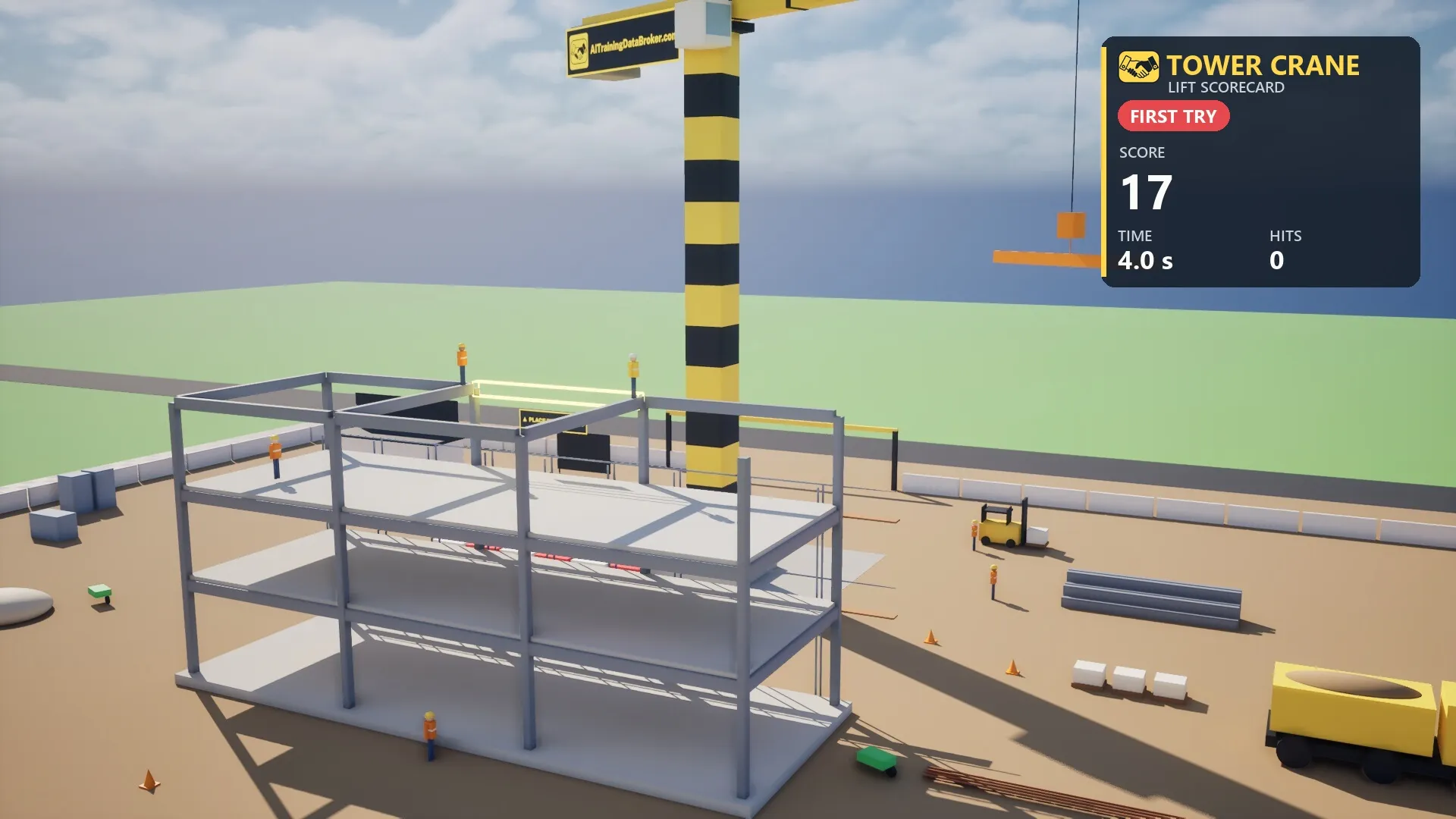
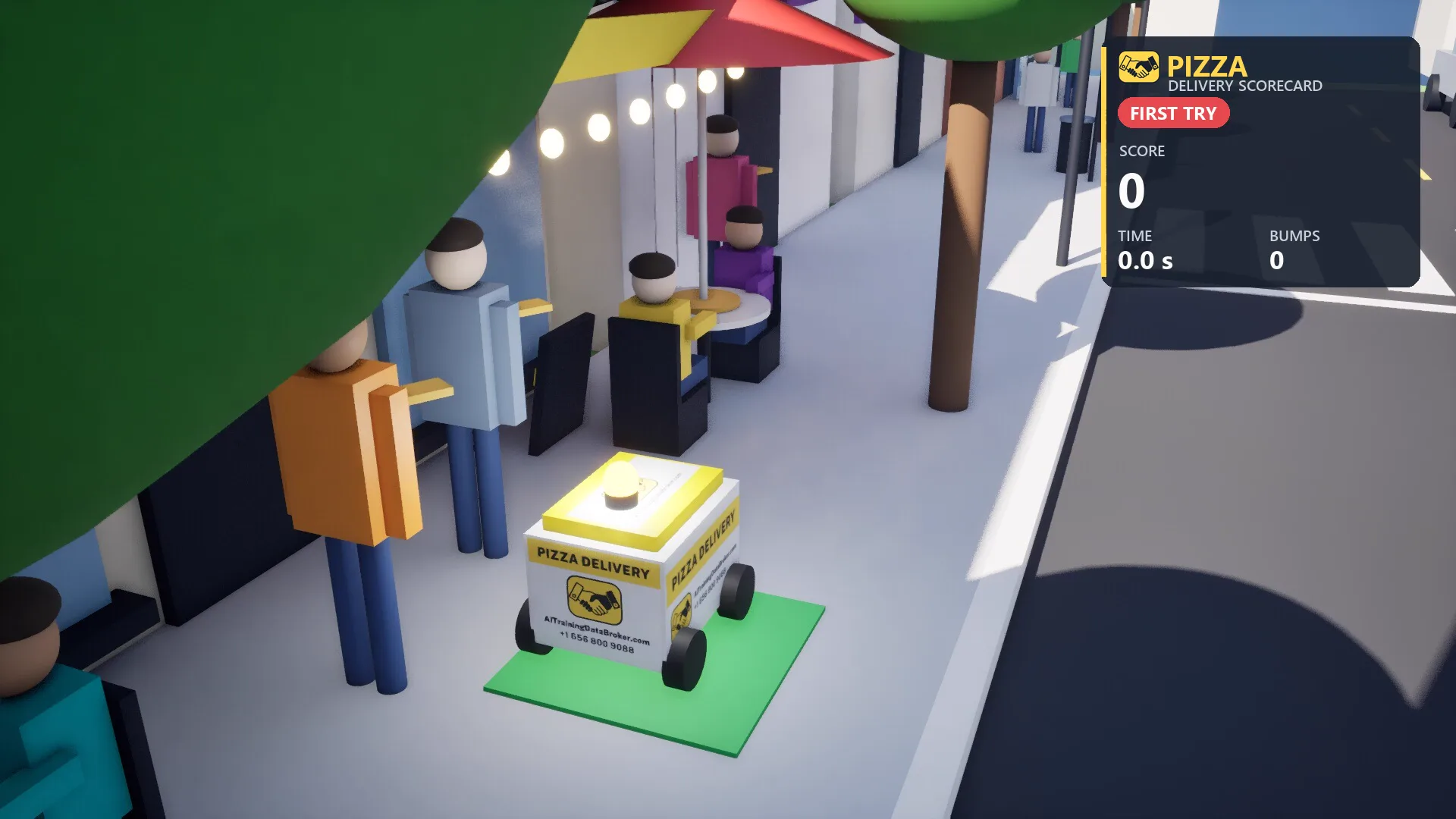
Trucking/Logistics AI RL Environment (Trailer Docking Demo & Unreal Engine)
The first back-in
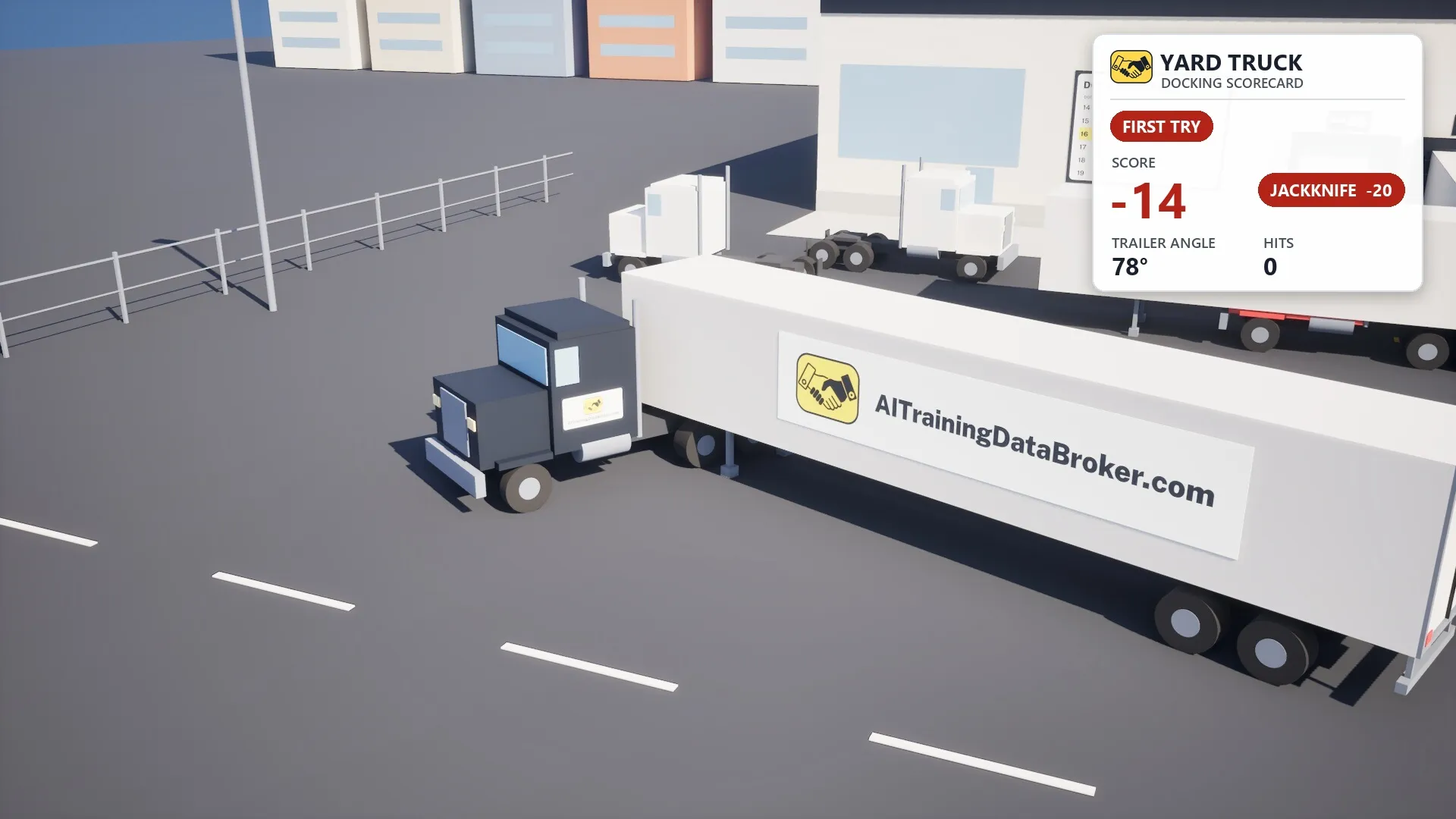
The first back-in
A trailer is due at door 16 at 2:20.
First try. The yard truck turns the wheel too hard while backing, and the trailer folds sideways.
That is a jackknife, and on a real yard it blocks the lane until someone sorts it out.
The video
The video for these slides is on its way. It will play here as soon as it is on our channel.
Subscribe on YouTubeFull script
A trailer is due at door 16 at 2:20.
First try. The yard truck turns the wheel too hard while backing, and the trailer folds sideways.
That is a jackknife, and on a real yard it blocks the lane until someone sorts it out.
This is a trucking RL environment, built in Unreal Engine.
A yard truck learns to back a trailer into a dock door.
To be clear up front, this yard was made for this video.
A real one would be built from a fleet's own yard and data.
First, why a fleet or a warehouse would care.
Trucks wait at the dock, and waiting is not harmless.
The US DOT Inspector General found that 15 more minutes of waiting at a dock raises the expected crash rate by 6.2%.
Backing in is slow and risky: a hit can bend a dock door, a bumper or the trailer.
And one trailer stuck at an angle blocks the lane for every truck behind it.
In a simulator, the truck can practise backing in before it goes near a real dock.
It can try thousands of times overnight, and nothing gets bent.
Here are 3 runs side by side: the first try, one practice run, and the run after practice.
Buying a truck is the easy part.
The hours go into teaching it, and practice in a simulator makes those hours cheaper.
AI labs are building practice worlds for trucking and warehouse work.
To make them realistic, they need data that only a fleet or a warehouse keeps.
That means telematics and GPS traces, the dock and yard schedules, and the damage and claims reports.
Most of that already sits in a company's own systems.
This is our yard: 10 dock doors, trailers at most of them, a staging row and a gate.
On the wall is the dock schedule: door 16, inbound, 2:20, backing in.
A real yard keeps that same record, door by door.
It is part of what makes a practice world realistic.
In RL, software learns from a reward: it tries, gets a score, and changes what it does next.
Each back-in earns points for keeping the trailer lined up with the door, and 20 more for docking straight.
A hit costs 30, a jackknife costs 20, and a slow back-in costs a little.
These rules are the reward function, and the yard sets them to match its own priorities.
Here is the practice from above, sped up.
One try lands crooked and hits the bumper, another folds into a jackknife, another docks.
Every try gets a score, and the best score keeps climbing.
After practice, the truck starts the turn early and keeps the trailer under control.
Watch from the dock: the trailer comes in straight and stops at the bumpers.
Door 16, 0 hits, full points.
Here is what a researcher found when trying this.
At Oakland University, Hao Yan trained a tractor-trailer to reverse in a simulator, with a score that punishes jackknifes.
It started at 0%.
Within about 500,000 tries it was succeeding almost every time, and it finished training at 99%.
That was all in simulation, and it shows how fast practice pays off.
Source: Oakland University dissertation, 2024.
Now the honest part.
Someone leaves pallets in front of door 16, and the truck backs right into them.
These runs were set up for the video, and a simulator only knows the yard it was built with.
A real one starts from the yard's own layout and data.
Then it is tested slowly on the real dock.
And it will not cover every yard.
So what about your own company's data?
One path: keep it, and build a private simulator of your own yard, on your own servers.
The other: license it to an AI lab.
It is de-identified first, and the contract sets the limits on use.
You keep your copy, and anything that cannot be licensed is left out of the deal.
A simple place to start: pick your busiest dock and pull a month of its schedule and damage reports.
I'm Jimmy. I have worked in data at Fortune 500 companies, as a data analyst, a data engineer and a software engineer, and I am trained in data science. I am also a Canadian military veteran, specialized in data analysis and reporting.
If you want to sell your data, I am your broker and technical advisor. I bring your data to several AI companies, and I guide your team through the technical side, including compliance. AI companies pay my fee.
Already shopping your data around? Contact us anyway. We can still work through the terms with you and help you negotiate a better price.
If you are buying data for an AI lab, I find the right data and see it through to delivery, so you can focus on AI research.
Backing into a dock is one job; every truck that comes through a yard leaves data behind.
Learn how licensing works at AITrainingDataBroker.com.
Which door in your yard gives drivers the most trouble? Tell me in the comments.
Thank you for watching, and see you next time.